What is Europe? The Bases of European Identity
Vaclav Havel

Wiki
Vitae
The
New Europe
What is Europe? The Bases of European Identity
Vaclav Havel
Wiki
Vitae
2. home, a place to
return to
for the former
communist countries
3. a set of economic and political
institutions
i.e., the Europe of
prosperity, political freedom, democracy
*4.
Havel asserts Europe is defined by the following
a common complex
history
common values
a common culture
a common way of life
a common destiny
How have these shaped
European
politics?
Do W and CE Europeans share this history?
What common experiences do they have?
What differences?
High culture vs. pop
culture (Reid, Generation E)
Do W and CE Europeans share this culture?
What do they share in common?
What differences do they have?
Common ways of
life
Commonalities E and W
Differences
Values
Which values animate European social life, politics?
Eurobarometer
Report
Source of these values?
Christianity,
Judeo-Christian Ethics
"Common Moral Minimum"
Kantianism
Tone of his conclusion: Europe = Christendom?
Do W and CE Europeans share this view?
Why or why not?
A
Common Destiny
Europe as the Future or Europe as the Past?
Andrei
Markovitz

Karl W. Deutsch Collegiate Professor of
Comparative Politics and German Studies at
University of MI
Anti-Americanism
in Europe: From Elite Disdain to Political Force
His
thesis:
anti-Americanism is becoming a mass phenomenon in Europe
a force that can bind Europeans together
an "other" against which to assert European Identity
says
European elites have always harbored these feelings toward Americans
what's different now is that it has trickled down to the average person
The
difference today, post-September 11th world:
American hegemony
uni-polar world
US is powerful
Measures
of Anti-Americanism
Pew
Europe's
Birthday: February
15, 2003
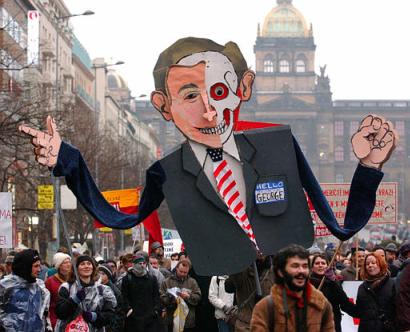
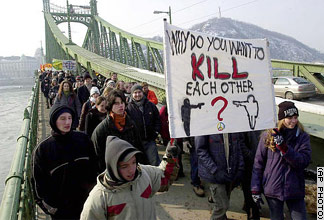
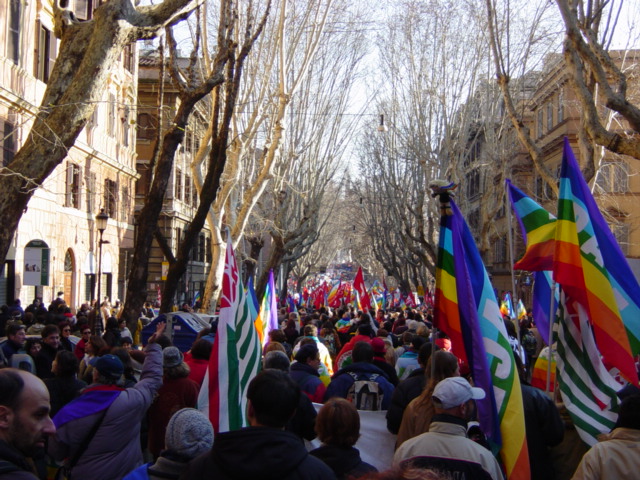
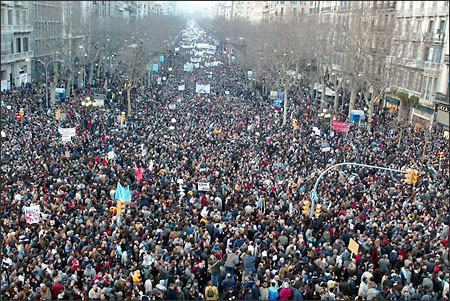
Ironic
that it's not 1989, fall of the Berlin Wall
Why?
How did West Europeans view these events?