
Padraic Kenney
his bio, career, interests
A Carnival of
Revolution: “A shy wave for Gorbachev”
CE Europe
in the late ‘80s
The konkretny generation
Age bracket (b. 1957-70)
Differences tactically,
philosophically
from other generations/types of dissidents
Tactics
anti politics yes, but also action oriented
hence the label "konkretny"
collecting and providing real information
giving lectures
visiting other East Bloc countries
supporting their efforts
sharing information
publishing samizdat literature
direct actions
the Dnieper River expedition
subbotnyki
Citizens' Initiatives
origins
"happeningi"
humor, irony, absurdism
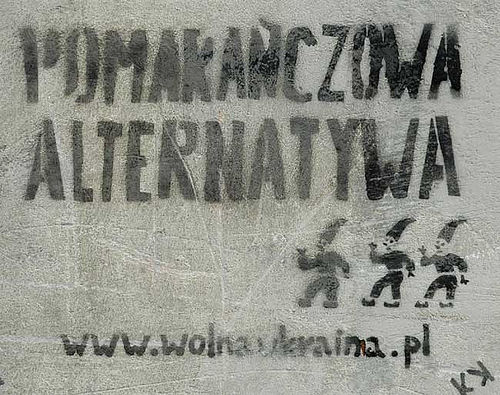
Orange Alternative
some overtly political acts
in Poland
refusing to take the oath
an act of civil disobedience
Symbols
what kind of symbols did the konkretny generation
employ, use, adopt, coopt?
nation, traditional national symbols
examples in reading?
the earth, the land
the rivers
mothers/children
John Lennon
Chernobyl
gnomes
Catalyzing events - Chernobyl
Cross-border movements
of activists; learning
each other’s techniques,
sharing experiences.
Poland: The Prototype of Konkretny
Action
Freedom and Peace
(WiP)
The Orange Alternative
Various other student groups,
ecologists
W Ukraine
Note difs between Ukrainian context
as
part of SU compared to Poland (124)
Feeder orgs/settings:
Café Yunist,
Nektar Café and Young Writers Union; Society of Mercy
The Lion Cubs (Lviv)
Chernobyl as catalyst, symbol
Idea – promoting Ukrainian culture
Subbotnyk – voluntary
labor service – cleaning
grave stones at cemetery on July 4
Hayvka – May picnic; old Ukrainian
hymns
Dnister River expedition
Hungary
Gabor Demszky – visits Poland;
learns
samizdat techniques
Bibo College (Istvan
Stumpf, Tamas Fellegi)
A resident college for law students from
outside of Budapest
Offers courses on the 1956 Revolution the crises of communism, Transylvanian culture, contemporary society
Some students travel to Gdansk and Warsaw to learn from Polish opposition culture; meet students from WiP; attend Pope’s third pilgrimage Mass June 1987
Lesson “to be pro-active and streetwise”
Halozat (The
Network of Free Initiatives)
Fidesz (Association of
Young Democrats)
published Magyar Narancs
samizdat, still published today
widely read by Hungarian intellectuals
culture, politics
Polish Historian Waclaw Felczak (Jagiellonian University) spends winter 1987-88 in Budapest ostensibly to teach Polish history,
but Felczak had spent WWII in Budapest organizing underground contacts between Poland and the West;
He was approached by Hungarian activists to give lecture on Solidarity at Bibo College; he recommends that they found a party;
March 15, 1988 – 140th
anniversary of the
Revolution of 1848 – march to statue of poet Sandor Petofi, chanting
“Democracy”
Call for free elections, new constitution;
police don’t break it up but arrest some;
Two days later dozen
intellectuals
some from the Democratic Opposition (70s
group) and the Danube Circle, others veterans of 1956, meet and form
the
Network for Free Initiatives (Network “Halozat” for short)
Czechoslovakia
NMS – Independent Peace Association- Initiative for the Demilitarization of Society
Founded Jan 1987
the 10th anniversary of Charter 77
declaration
Coalition of pacifists and opponents of communist army, branched into environmental issues
Staged demonstration on Human Rights Day (Dec 10. 1987)
Catholic students – attempted to register official peace organization, Young Artists for Peace
The Jazz Section
The John Lennon Peace Club
The Society for a Merrier Present
The Student Press and
Information Center