Democratization of Eastern Europe
The Glorious Revolutions of 1989
How did they happen?

Multi-variate
Explanation
“the
unmoved mover” Gorbachev

Unsustainable economic
system
Pressures “from below”
Civil Society as a strategy
Anti-politics,
living as if
Solidarity
movement
Pope
John Paul II
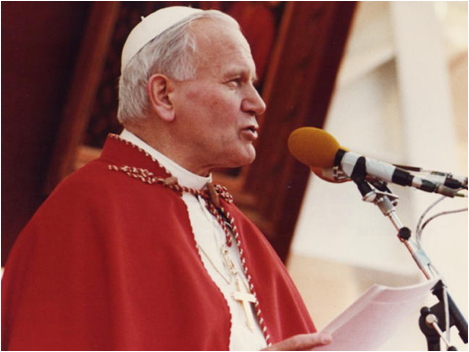
Pacted transition
Negotiation between
regime and opposition forces to broker terms to hold election
Elections
Rationale on the part
of the Communist parties
Timeline
1988
August _ strike wave in
Poland
October _ negotiations on
terms of Round Table
November _ Walesa debates
head of OPZZ
December _ Gorby promises troop withdrawals
1989
February _ April Polish Round
Table
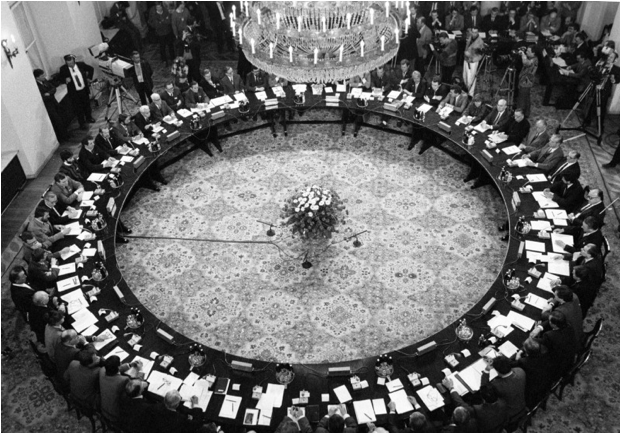
Solidarity re-legalized; Monday
evening peace marches begin in GDR
March _ Hungarian Round
Table convenes
June _ Solidarity _wins_ 1989
semi-free Parliamentary elections;
[Tiananmen Square massacre
happens in China]
July _ Jaruzelski
elected president (by Sejm)
August _ Solidarity’s
Mazowiecki chosen as PM; first GDR refugees escape
thru Hungary
September _ Hungarian Round
Table concludes; refugee crisis builds; New Forum forms in GDR
October _ Hungarian
Socialist Workers_ Party disbands;
Monday marches in GDR reach
critical mass _ hundreds of thousands!

November _ Berlin Wall
opens
December _ Havel elected
president of Czechoslovakia; GDR Round Table opens; Helmut Kohl visits Dresden;
Romanian revolution ends
with execution of Ceausescus